
Trigeminal Ganglion RFA
Trigeminal neuralgia causes some of the most severe pain known to medicine, electric shocks to the face triggered by eating, talking, or a light breeze. Trigeminal Ganglion RFA targets the nerve at its root to silence these attacks.
Your journey
Your Road to a Pain-Free Life
Test your knowledge
How Well Do You Know This Procedure?
Frequently asked questions
What is Trigeminal Ganglion RFA?
Trigeminal Ganglion RFA (also called Percutaneous Radiofrequency Thermocoagulation (PRFT)) is a minimally invasive procedure that applies controlled heat to a portion of the trigeminal (Gasserian) ganglion at the base of the skull. This selectively damages the pain-carrying fibres of the trigeminal nerve, interrupting the severe electric-shock attacks of trigeminal neuralgia while preserving as much normal sensation as possible.
Who is the right candidate for Trigeminal Ganglion RFA?
Patients with classical trigeminal neuralgia (TN1) who have failed or are intolerant of medications such as carbamazepine and oxcarbazepine are good candidates. It is also suitable for elderly patients or those with medical co-morbidities who are not fit for open surgery (microvascular decompression). An MRI of the brain should be done first to exclude secondary causes of facial pain such as tumours or multiple sclerosis plaques.
How is Trigeminal Ganglion RFA performed?
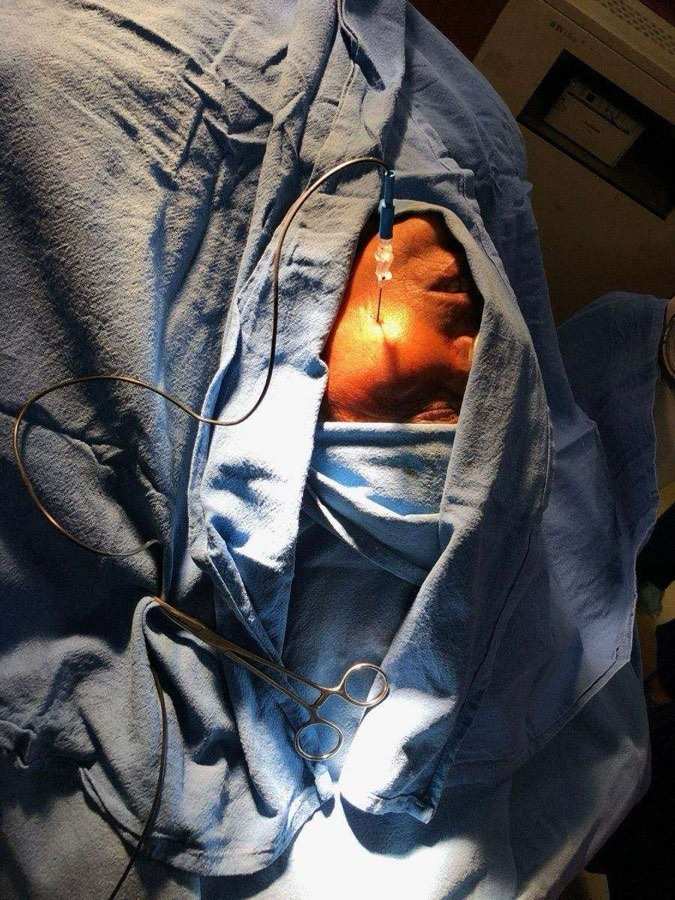
You are given intravenous (IV) sedation to make you comfortable. Under fluoroscopic guidance, a special needle is passed through the cheek and inserted through the foramen ovale (a small natural opening in the base of the skull) into Meckel's cave, which is the space where the Gasserian ganglion sits. Once the needle is positioned, sedation is briefly lightened. Sensory stimulation is applied: you will feel a buzz or electric sensation in the face, confirming the correct division (V1, V2, or V3). IV sedation is then deepened while thermocoagulation (heat) is applied to ablate the targeted fibres. Total time: 30–45 minutes.
What facial numbness can occur after Trigeminal Ganglion RFA?
Thermocoagulation of the ganglion causes an expected and intended degree of reduced sensation (called hypoalgesia) in the distribution of the treated division. For example, if the lower face (V3) was treated, you may notice a numb or cotton-wool feeling in that cheek or jawline. This is the mechanism by which the pain attacks are stopped. The degree of numbness is managed by adjusting the temperature and duration of ablation. Most patients find this numbness far preferable to the pre-procedure pain. In rare cases, an unpleasant burning sensation (anaesthesia dolorosa) can develop, Dr. Jain will discuss this risk during consent.
When will pain relief occur after Trigeminal Ganglion RFA?
Unlike most other RFA procedures, relief from trigeminal ganglion thermocoagulation is often immediate. Most patients wake from sedation with a noticeable reduction in their baseline face pain and trigger sensitivity. Eating and talking without triggering attacks is often possible from the same day. Medications are typically tapered over the following weeks in consultation with your team.
How long does pain relief last after Trigeminal Ganglion RFA?
Clinical literature reports pain-free outcomes in more than 90% of patients, with average pain relief lasting from 3–5 years. Some patients maintain long-term relief beyond 10 years. If attacks eventually recur, the procedure can be repeated. Success rates with repeat procedures are comparable to the first treatment.
How does this compare to microvascular decompression (MVD)?
Microvascular decompression (MVD) is a brain surgery that physically separates the offending blood vessel from the trigeminal nerve. It offers the highest long-term pain-free rates (around 70–85% at 10 years) and does not cause facial numbness. However, it carries the risks of open neurosurgery, including stroke, hearing loss, and CSF leak. Trigeminal Ganglion RFA carries lower surgical risk and is an excellent option for patients who are not surgical candidates, prefer to avoid brain surgery, or wish to try a minimally invasive approach first. Dr. Ashu Jain will help you weigh both options.
Any concern?